|
NE@TWAE MEDIA STATION
Introduction
NEATWARE MEDIA STATION is a real-time media processing and broadcasting station optimized for Neatware's software. It is a solution for business video applications. NEATWARE MEDIA STATION Duo, Quad, Octa, and Hex support 2, 4, 8, and 16 monitors respectively.
- Requirements
A Business Media Station with Performance and Power Efficiency
A Reliable Media Storage System
A Wireless Network with Internet Connection
- Analysis
Today a gaming machine has the computing power of a supercomputer before, while a business server owns reliable and large storage capability. However most business servers don't have the capability of media processing. NEATWARE MEDIA STATION reference design is target on both a reliable server and a high-performance workstation to provide video processing service online.
- Design
NEATWARE MEDIA STATION include several new technologies:
-
Neatware's Multichannel Technology implemented multiple High-Definition video playback and composition in real-time. This technology allows video professionals generate fantastic visula special effects in real-time.
Stream Computing Technology in modern GPU can process 3D and multimedia in parallel. It makes Game, HD Media, and Effects available in a PC.
Today Multicore Processor has been become main stream CPU. They are widely available from Intel, AMD and other chip makers. These duo core, quad core, and hundred core processors that were made in 65nm and 45nm technology, provided great computing capability in low-power consumption.
Virtualization Technology allows multiple operating system such as Windows and Linux to run on a single hardware platform.
Storage and Database applies RAID technology for storage management and SQL database for Content Management.
Remote Management applies Intel's new AMT technology for security remote computer management.
Wireless Technologies have been applied in media communication via WiFi (802.11a/b/g/n), Bluetooth, Wireless USB, and WiMax connections.
- Implementation
Hardware
Below is a hardware reference implementation of NEATWARE MEDIA STATION.
- Chaisse and Power Supply
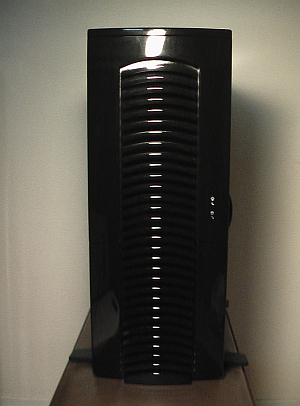
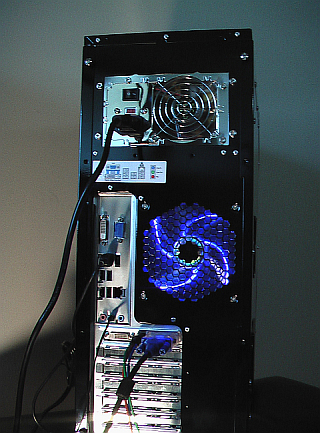
NEATWARE MEDIA STATION requires more space for expansion. A full tower chaisse is suitable for 5.25" and 3.25" devices with many available trays. The chaisse may also contain an ATX motherboard. To provide enough power supply for possible usage of multiple GPU such as SLI and Crossfire, a 600W power supply has been selected, although 400W is enough for a low-end system.
- Motherboard
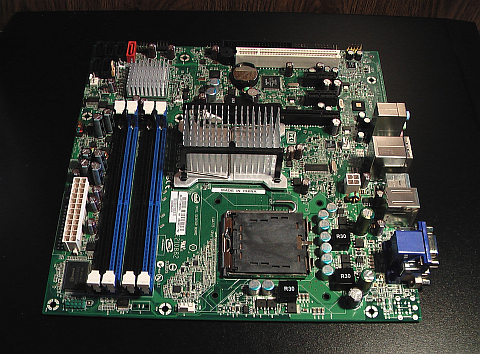
The motherboard is Intel's Q35 series. It supports Core 2 Duo, Core 2 Quad, and Pentium Dual Core, as well as Celeron from 65nm processor to 45nm processors. Q35 chipset supports 8GB 1.8V DDR2 800/667 MHz memory (good for media server in 64-bit), 8 SATA, 1 external SATA (for external hard disk), 1 PCI Express x16 and two x1, 1 PCI slot, 12 USB connection, 1 Fireware 1394a port (useful for DV convert), 1 Ethernet 100MB/1000MB port (for fast internet connection).
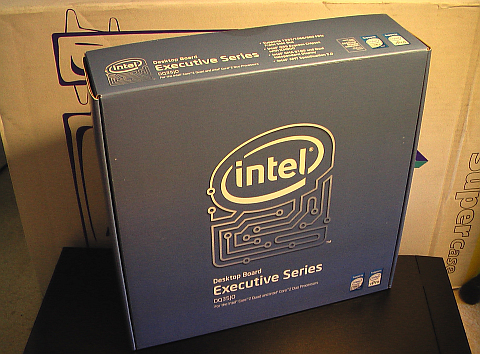
Intel's Q35 motherboard is designed for business computer. It supports SATA RAID with Intel Matrix Storage Technology (RAID 0, 1, 5, 10), double the bus bandwidth of HDD up to 3.0Gb/s data rate. Compare to G35 series its graphics capability is a little bit weak. Since we need a discret graphics card, integrated graphics is unnecessary.
To support multiple monitors, one PCIe 16x motherboard may support upto 4 monitors with two GPUs in one board. Two PCIe 16x motherboard may support upto 8 monitors with two graphics cards. Finally Four PCIe 16x motherboard may support upto 16 monitors with four graphics cards.
- Processor
Multicore processor has become the main stream PC now. Intel Pentium Dual Core processor, now at the price around $90, is a 64-bit processor in 65nm technology with power consumption at 65W. Although Intel Pentium Dual Core processor is in the low-end of Core 2 series, it has the same architecture as high-end Core 2 Duo. The main difference is that Core 2 Duo/Quad has larger L2 cache and higher frequency.
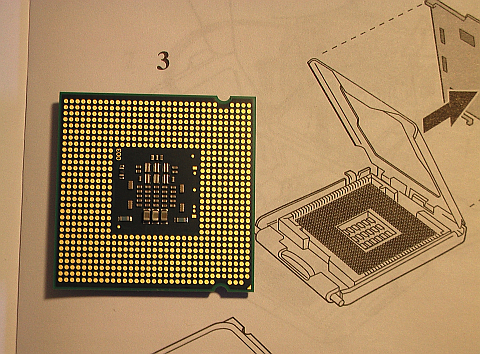
We selected 1.8GHz Pentium Dual-Core processor to test the bottlenect in multichannel HD video playback. The exciting result is that 1.8GHz Pentium Dual-Core is excellent for video composition in real-time upto 4 channel HD 720p videos.
Users of Ladybug Mixer Vn are welcome to test LMV8 on AMD based computers as well and discuss in the Neatware Forum.
- Cooling System
Today cooling system has become an important factor of a high-performance PC. Almost all the chips included CPU, GPU, chipset, memory, hard disk, and power supply require some ways to get heat out. Heatsink and fans are popular components in a cooling system. Water cooling system has been used for overclocking to make PC work under high frequency.
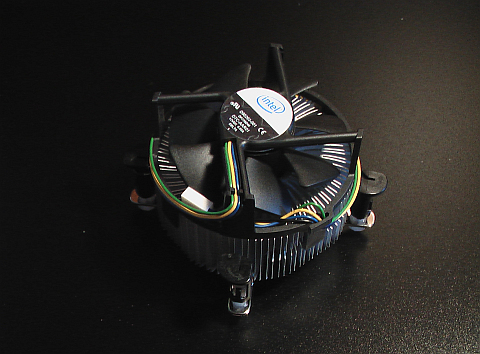
An advantage of passive cooling system with heatsink is noiseless. High quality fans generated little noise now. In our experiment it is surprise that the big noise source is from the power supply. Since chipset is in passive cooling and in 90nm technology, its temperature is higher than CPU and GPU.
- Memory
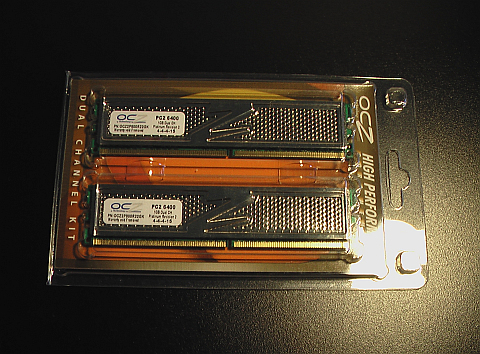
OCZ memory with 2GB Dual channel DDR2 800Mhz is one of the fastest memory module in DDR2. Although Intel's Q35 supports DDR3 memory, the current price of DDR3 is still very high.
- Graphics and Media
AMD Radeon HD2600XT 256MB GDDR3 is an excellent graphics card for NEATWARE MEDIA STATION. Below is a benchmark.
HD2600XT is 128-bit with GDDR3 256MB Memory, 3DMark06 4803.
HD2600PRO is 128-bit with GDDR2 512MB Memory, 3DMark06 2955.
HD2400PRO is 64-bit with GDDR2 256MB Memory, 3DMark06 1406.
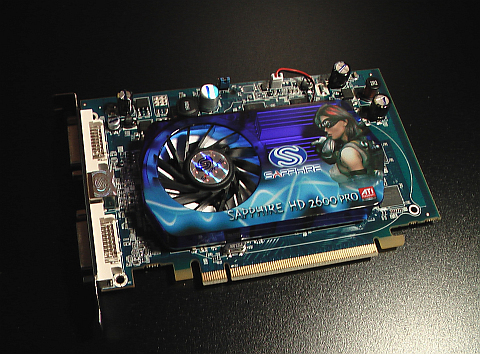
Below is Radeon HD2600 PRO 512MB we used to test ultra high-resolution video.
There are several reasons for us to select HD2x00 series for NEATWARE MEDIA STATION:
UVD engine implemented HD hardware decoding for Full-HD 1080p videos. H.264 (MPEG4) and VC-1 (WMV HD) are decorded in hardware which largely reduce the CPU usage and play HD video in smooth.
UVD also integrated an audio processor for HD audio processing. it supports AC3 (5.1) Dolby Digital and DTS coding modes, 32kHz, 44.1kHz, 48kHz 16-bit audio stream in Windows Vista and XP system.
HDMI capability allows graphics card to be connected to HDTV large screen directly. The data rate of HDMI supported digital video and audio can be upto 3.95Gbps.
65nm technology keeps HD2x000 power consumption and noise level at low.
HD2x00 series supports Crossfire and multiple monitors.
NVIDIA's GeForce 8000 series that supports SLI and PureVideo are also an alternative.
- Storage Device
SATA Hard Disk is suitable for stream media storage. Seagate, Neatware's storage partner, its SATA HDD is good at noiseless, high capacity, reasonable price with 5 year warranty.
Although RAID disk array has been used for realiable disk access initially, it is required to record uncompressed HD video because of the demands of high-speed access. The motherboard of NEATWARE MEDIA STATION supports RAID (0, 1, 5, 10) with Intel's Matrix Storage Technology.
- HD Video Recorder
For video editing to display video effects is not enough. You may need a capturer to record your terrific clips. There are many recorders available from S-video and DVD recorder to HD video recorder.
- HDTV Tuner
HDTV tuner allows you accept HDTV programs.
- Accessary
Accessaries include wireless keyboard/mouse, headset, speaker, and printer.
Performance, price, and power consumption are several factors to measure a PC system.
Software
Windows Server 2008 (Longhorn, Vista Server) beta is the first OS that we can install without troubles. However, some normal windows features are not installed by default like Windows Media Player and WMV codec in Windows Server 2008. To test WMV HD (VC-1) video, we have to open Server Manager and click Add item, then select Desktop Experience to install WMV codec and player.
Ubuntu Linux Server 64-bit could not be installed because it could not find a CD-ROM. But Ubuntu Linux Server with LAMP package installed fine.
Windows Vista Ultimate may be the best OS for NEATWARE MEDIA STATION. The 32-bit version is good at compability. The 64-bit version is more better for performance.
Windows Vista Home Premimum includes a Media Station for multimedia processing.
Windows XP Professional SP2 runs well at 512MB memory.
Windows XP Embedded SP2 is good for customized media player.
We have tested Neatware's software on Windows Server 2008. Ladybug Player XP can run on it without any problem. The old Ladybug Player Vista 2.0 with 3D effects also worked fine. By using the fast GPU a movie can be displayed on a 3D surface of a coffee cup in 60 FPS.
The latest unreleased Ladybug Mixer V4/V8 2.5 had been test on the MEDIA STATION. Since no DVD decoder was installed on Windows Server 2008, there is a warning message at the beginning. Since JPEG codec has changed in Windows Server 2008, Ladybug Mixer V8 can not display JPEG picture. We have to modify the default files in Ladybug Mixer V8 to make it running fine.
Case Study
- Ladybug Mixer V8 on Windows Server 2008
To test the performance of Ladybug Mixer V8 (LMV8) on the NEATWARE MEIDA STATION DUO, we loaded 8 HD 720p WMV-HD videos in the eight channels. All 8 videos could be played in paralle but the sound lost synchronization. The CPU usage was 100% and the FPS was 15. That was to say the current configuration of Media Station Duo was not powerful enough to execute eight videos in real-time.
After stopping 4 videos, LMV8 could run other videos smoothly. Below is the benchmark:
| Video_Running |
Shader_Name |
FPS |
CPU_Usage% |
|
| 1 |
OctaZone |
30 |
41 |
| 1 |
QuadZone |
55 |
45 |
| 1 |
DuoZone |
60 |
40 |
| 1 |
Others |
60 |
40 |
|
| 2 |
OctaZone |
30 |
56 |
| 2 |
QuadZone |
55 |
58 |
| 2 |
DuoZone |
60 |
55 |
| 2 |
Others |
60 |
58 |
|
| 4 |
OctaZone |
30 |
90 |
| 4 |
QuadZone |
50 |
93 |
| 4 |
DuoZone |
48 |
95 |
| 4 |
Others |
52 |
73 |
|
| 8 |
OctaZone |
18 |
100 |
| 8 |
QuadZone |
35 |
100 |
| 8 |
DuoZone |
37 |
100 |
| 8 |
Others |
15 |
100 |
|
|


 Copyright© 2004-2007 Neatware. All Rights Reserved.